Governance
The importance of risk management
Risk registers too often sit untouched, updated only for reporting — rather than being used as tools to drive better delivery decisions.
MOSH PATEL · 6 May 2026 · 5 min read

Every project carries risk — but not every organisation manages it effectively. Too often, risk registers sit untouched, updated only for reporting, rather than being used as tools to drive better delivery decisions.
Visibility, ownership, action
- Early and open identification — risks should be discussed, not hidden.
- Clear ownership and accountability — every major risk needs someone driving the response.
- Active monitoring — keeping an eye on triggers, not just outcomes.
- Alignment to strategic goals — risks should inform, not delay, decision making.
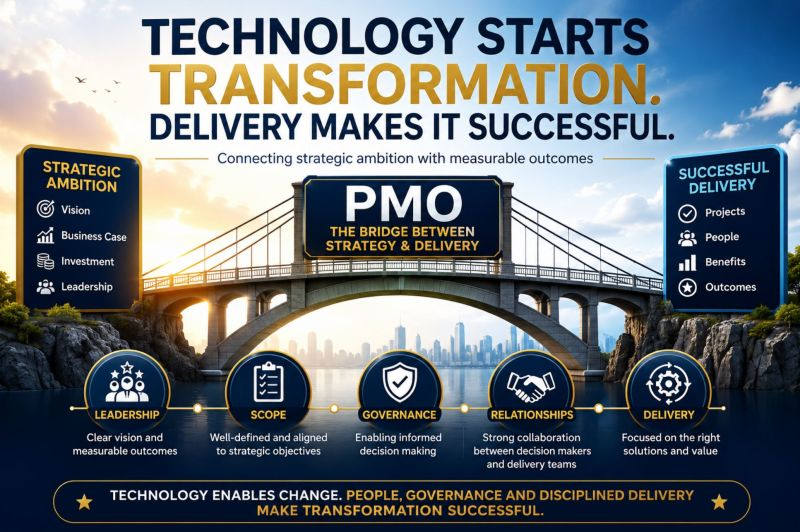
This is where an effective PMO adds real value. It provides independent oversight, acting as a second set of eyes to review, challenge, and support delivery teams whilst informing leaders on the options. By doing so, the PMO strengthens assurance, improves transparency, and helps leadership make informed, timely decisions.
“In complex programmes, that independent view often makes the difference between reacting late and responding early.”
Found this useful?
Share to LinkedIn
Written by
Mosh Patel
Principal & Founder, P3M
Senior Portfolio consultant with over 10 years delivering complex transformation across government, healthcare, digital and cyber sectors — from £89m portfolios to enterprise-wide operating model redesign.
Related insights