AI & Data
AI, data, and the delivery gap in government
Around 70% of government bodies are piloting or planning AI. Only about a third have deployed it. The barriers are rarely the algorithms.
MOSH PATEL · 9 December 2025 · 6 min read

The NAO's March 2024 report on AI in government makes a useful read: around 70% of government bodies are piloting or planning AI, and only about a third have actually deployed it so far.
I see these findings reflected in real delivery settings across government and public services. From experience, the barriers aren't usually about the algorithms — they're about the environment.
- Legacy systems that limit integration and scalability
- Fragmented or poor-quality data
- Skills gaps and capability constraints
- Inconsistent governance and unclear accountability
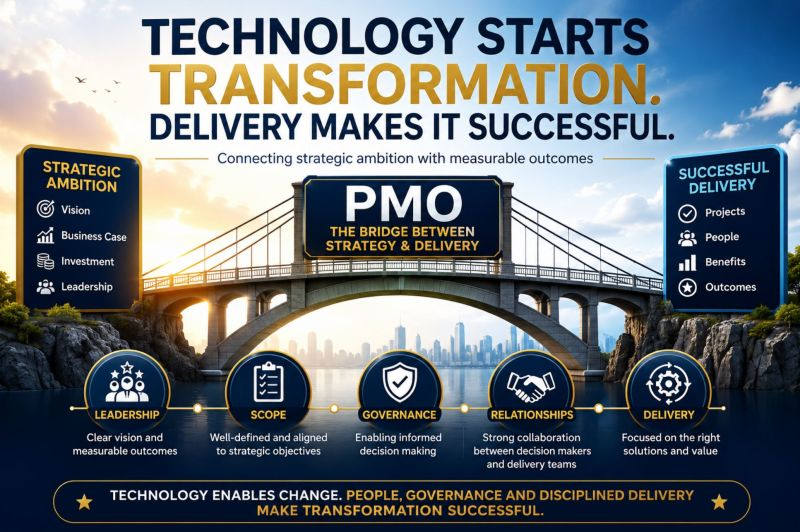
So where does the PMO come in?
- Align AI projects with business strategy and policy goals
- Enforce governance, standards, and benefits tracking
- Coordinate dependencies across teams and departments
- Keep efficiency, outcomes, and value for money at the centre
“AI is powerful — but without delivery discipline, it can easily amplify existing problems.”
A well-structured PMO helps governments move from experimentation to execution — turning innovation into measurable, lasting public value.
Found this useful?
Share to LinkedIn
Written by
Mosh Patel
Principal & Founder, P3M
Senior Portfolio consultant with over 10 years delivering complex transformation across government, healthcare, digital and cyber sectors — from £89m portfolios to enterprise-wide operating model redesign.
Related insights